

Uniform color starts with uniform application. Before selecting a turf paint or pigment, identify the grass species, whether it is actively growing, transitional or dormant, its height of cut, and the desired shade. The same amount of colorant can appear different on different canopies.
Start with turf conditions
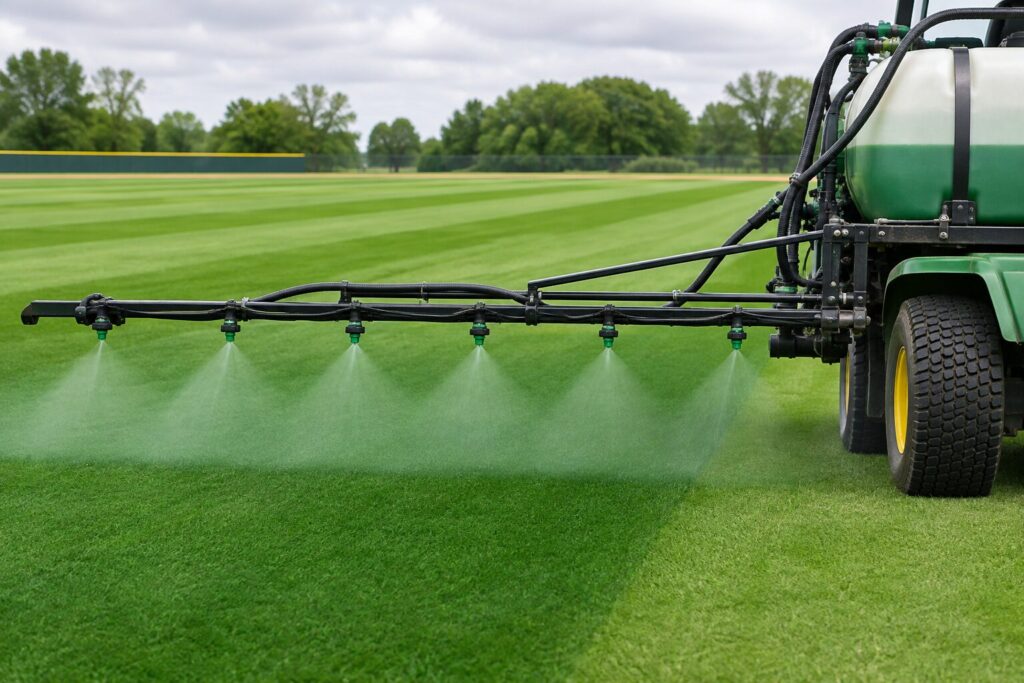
Calibration measures how much finished spray reaches a known area. Carrier volume is the total finished spray applied per acre or hectare; product rate is the amount of concentrate applied over that area. They are not interchangeable.
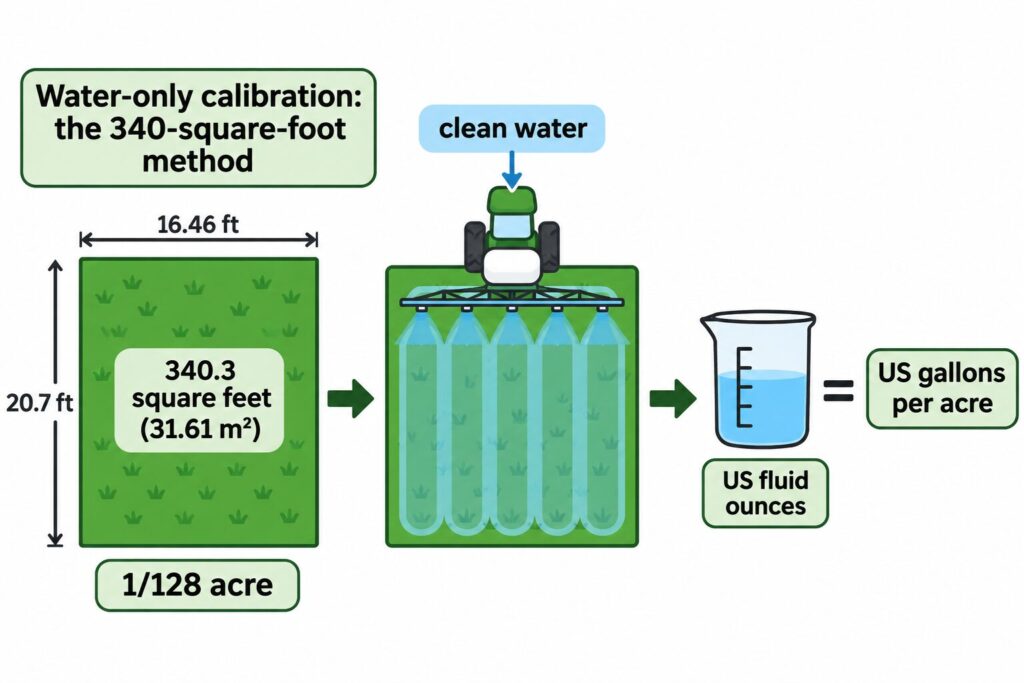
Water-only calibration: the 340-square-foot method
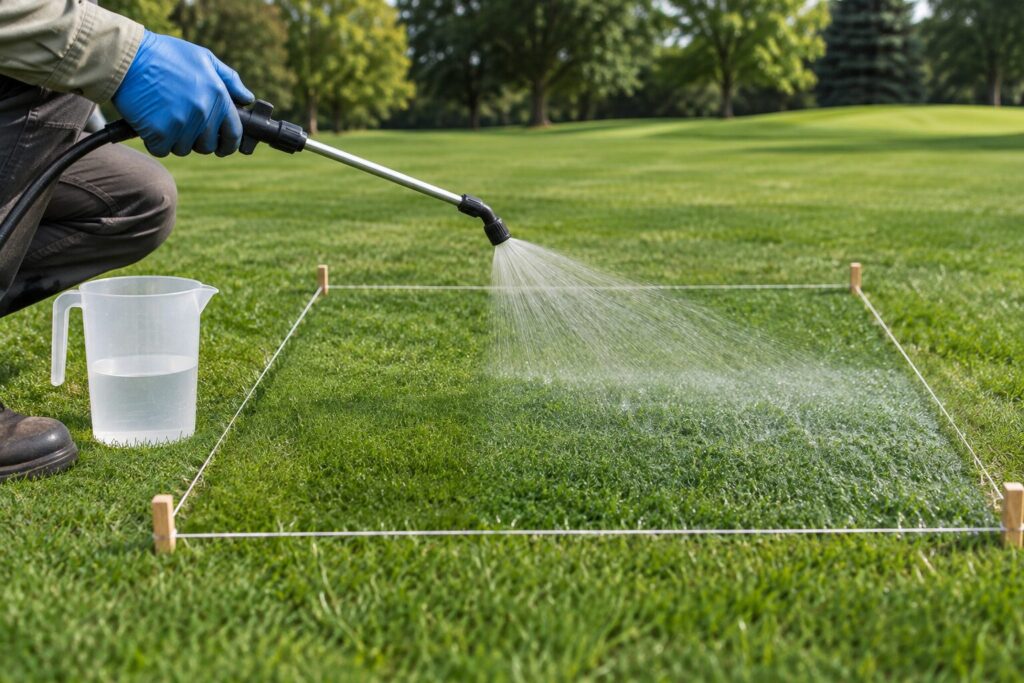
Mark a test area of 340.3 square feet (31.61 m²), which is 1/128 acre. Using clean water, spray it with the actual nozzle, pressure, walking or vehicle speed and swath overlap. Measure the US fluid ounces used to refill the sprayer to its starting level. The number of ounces used equals US gallons per acre. Repeat at least three times and average. For a boom, measure individual nozzle outputs and replace inconsistent or worn tips.
Calculate product separately from spray volume
For a known treatment area, multiply the selected product rate per acre by acres treated. Divide the calibrated finished-spray gallons per acre into the tank capacity to determine acres per tank. Do not confuse a water-to-product dilution ratio with a finished-spray volume target.
A worked Endurant FLEX example
Illustration only: at 50 US gallons of finished spray per acre (468 L/ha) and 64 US fluid ounces of FLEX per acre (4.68 L/ha), a 100-US-gallon finished tank covers 2 acres and requires 128 US fluid ounces (1 US gallon; 3.785 L) of FLEX. Add water to reach 100 US gallons of FINISHED mix, rather than adding 100 gallons of water. This is an arithmetic example, not a universal rate.
Avoid common application errors
Mow and clear clippings before application. Maintain agitation where required. Check nozzle pattern, spray pressure and overlap; avoid windy conditions and overspray onto hardscape. Split directions where appropriate for coverage, but keep the TOTAL intended rate unchanged. Allow complete drying and check transfer before play. Always follow the current product label.
Frequently asked questions
Q: Is more water always better? No. Excess carrier may cause runoff, while too little may give poor coverage.
Q: Can I calibrate with pigment in the tank? Use clean water first.
Q: Is a garden sprayer acceptable? Yes for small areas, provided you measure output and coverage.
Q: Can I use the same rate on dormant and growing turf? No; select the product and rate for the actual turf condition.
Sources and further reading
- Penn State: ounces-to-gallons calibration
- Penn State: backpack broadcast calibration
- Endurant FLEX product page
- Geoponics professional preparation guide
Product page: Endurant FLEX.