

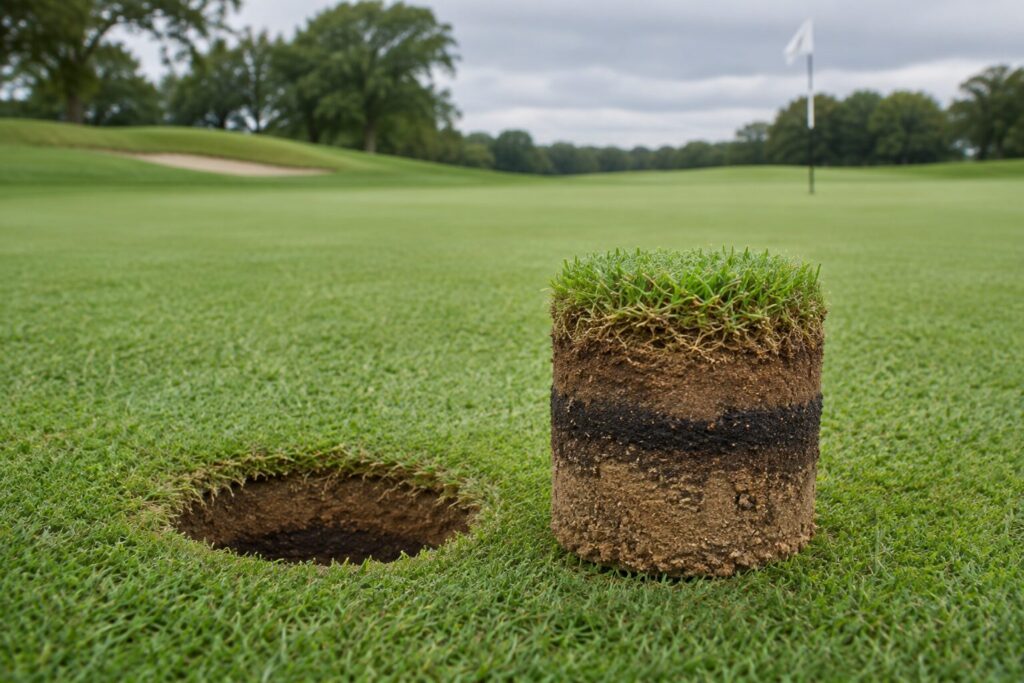
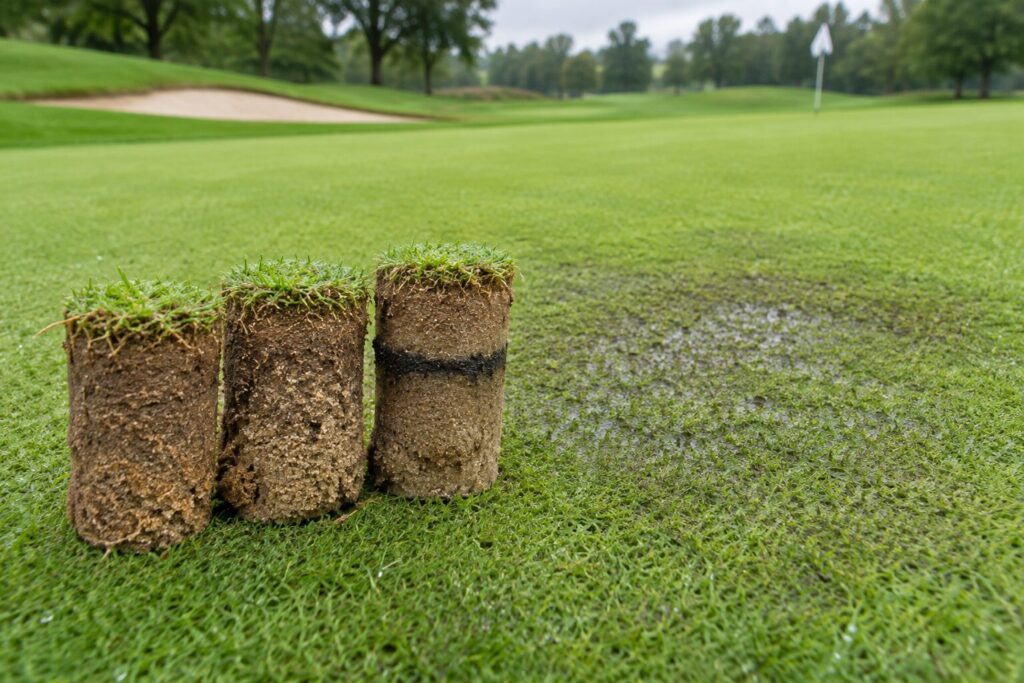
A black band in a soil core, a rotten-egg odor and thinning turf are warning signs of oxygen-starved soil. The durable solution begins with diagnosis and restoring water movement and gas exchange—not simply applying more product.
What is black layer?
Black layer is a dark deposit of metal sulfides, often iron sulfide, that develops when saturated or poorly aerated soil becomes anaerobic. Under these conditions, sulfate-reducing microorganisms can generate hydrogen sulfide. The gas can injure turf roots, while sulfides leave a black discoloration in the soil profile.
Black layer is a soil-condition problem, not a single infectious turf disease. It can appear in sand-based putting greens, sports fields, sod production areas and landscape turf when drainage or oxygen supply is restricted.
How can you recognize it?
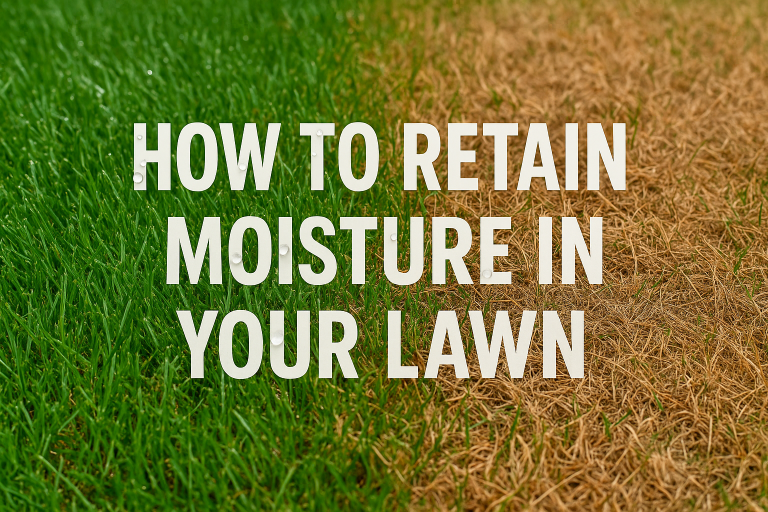
Look for turf that thins or turns yellow in low or persistently wet spots, reduced rooting, and a black subsurface band or pockets in a soil core. A sulfur or rotten-egg odor is another clue, but odor alone does not prove the diagnosis.
Inspect several affected and unaffected areas. Penn State notes that black layer is often found within the upper 4 inches (10 cm) of the profile; the depth varies with construction and conditions. Do not confuse a black subsurface layer with algae or cyanobacteria growing on the turf surface.
What causes oxygen loss in the root zone?
Common contributors include excessive irrigation, poor sprinkler distribution, repeated heavy rainfall, blocked drainage, compaction, organic-matter accumulation, and incompatible sand or soil layers. Water-filled pores restrict oxygen diffusion, allowing reducing conditions to develop.
Fertilizer selection can matter. Excessive elemental sulfur or some sulfur-containing inputs may worsen sulfide risk under anaerobic conditions. A qualified agronomist should review the soil test, water quality and fertility program before changing nutrient sources.
Five field checks before treatment
- Compare soil cores from healthy and weak turf, recording the depth and thickness of dark layers.
- Measure root depth and soil moisture rather than relying on color alone.
- Check sprinkler overlap, runoff and low spots after irrigation or rain.
- Review drainage outlets, organic matter and possible construction layers.
- Record the date, weather, irrigation and turf response so changes can be evaluated.
If the issue persists, ask a turf diagnostic laboratory or agronomist to assess physical layering, organic matter, salinity and other possible causes. Do not assume every dark soil band is black layer.
Will sand topdressing fix black layer?
Appropriate, compatible sand topdressing can support a long-term organic-matter management program when paired with cultivation. However, adding sand onto a restrictive layer or using incompatible material can make layering and water movement worse.
Topdress only after evaluating the existing root-zone mix, infiltration and cultivation plan. Sand is not a substitute for drainage repair or oxygen exchange.
Where Penterra fits
Penterra is a Geoponics soil penetrant intended to reduce water surface tension and improve infiltration. It may support a broader water-management program where poor wetting or infiltration contributes to stress; it cannot physically remove a compacted layer or replace subsurface drainage.
The current Geoponics product page lists a professional boom-sprayer range of 32–64 US fl oz/acre (2.34–4.68 L/ha), with at least 50 US gal/acre (468 L/ha) carrier water, followed by irrigation. This is product-page guidance, not a site-specific black-layer prescription. Verify the current container label, local rules and equipment calibration.
Where Agriox fits—and the safety distinction
Geoponics describes Agriox as a slow-release soil oxygen source. It is a possible supplemental tool for an agronomist-managed program, but the independently documented first-line corrections for black layer remain aeration, irrigation control, drainage and root-zone management. Do not promise that Agriox alone eliminates hydrogen sulfide or restores a damaged green within a fixed number of days.
Agriox is an oxidizing material. Its published label and SDS warn of serious skin/eye hazards and incompatibility with combustible or certain other materials. The label directs users to apply it alone, not tank-mixed with metal-containing nutrient products. Manufacturer webpages and label examples differ in rates, so this article intentionally gives no universal Agriox application rate. Confirm the current label, SDS, PPE and professional supervision before use.
A practical recovery sequence
First correct irrigation excess and check drainage. Next, use suitable cultivation or venting to create gas-exchange pathways; USGA guidance discusses solid-tine venting at approximately 0.12–0.31 inches (3–8 mm), selected according to site conditions. Manage organic matter with compatible sand and cultivation, then review fertilizer sources.
Consider Penterra or Agriox only after the physical problem and product suitability have been assessed. Track root growth, soil moisture, visible black deposits and turf density over weeks and months; severe cases may take extended management rather than one treatment.
What should homeowners and municipalities do?
On a home lawn, school field or municipal park, start with irrigation audits, surface drainage, traffic patterns and a basic soil evaluation. Deep, persistent waterlogging may require a drainage professional. Avoid applying oxidizing products without training and the current safety instructions.
For golf and sports turf managers, keep dated core photographs and moisture readings to document whether the underlying root-zone conditions are actually improving.
FAQ / Q&A
Does a rotten-egg smell always mean black layer?
No. It suggests reducing conditions and possible hydrogen sulfide, but confirm with soil cores and professional diagnosis.
Can I solve black layer by applying more sand?
Not reliably. Incompatible topdressing can create layers; drainage, oxygen exchange and root-zone compatibility must be addressed.
Will a wetting agent replace aeration?
No. A soil penetrant can influence water movement, but it does not create the same physical channels as cultivation or repair blocked drainage.
How quickly will a green recover?
There is no universal timetable. Recovery depends on root damage, drainage, weather, turf species and whether the causes have been corrected.
Need help assessing water movement or soil oxygen management? Review the linked Geoponics product information and consult a qualified turf professional before choosing a treatment.
Research references / Fuentes / Fonti / Sources / Kaynaklar / Referências
- USGA – What To Do for the Black Layer Blues
- Penn State – Black Layer diagnostic profile
- USGA – Look Under the Surface to Maintain Playing Quality
- Geoponics – Penterra product and application guidance
- Geoponics – Agriox soil remediation
- Geoponics – Agriox published label (PDF)
- Geoponics – Agriox safety data sheet (PDF)
Editorial and safety note: This guide is educational. Follow the current product label, SDS, local regulations and professional agronomic advice. Published manufacturer product pages are not independent field trials.