

Can sod be colored before harvest? Learn timing, colorant selection, drying, testing and handling precautions for professional sod farms.
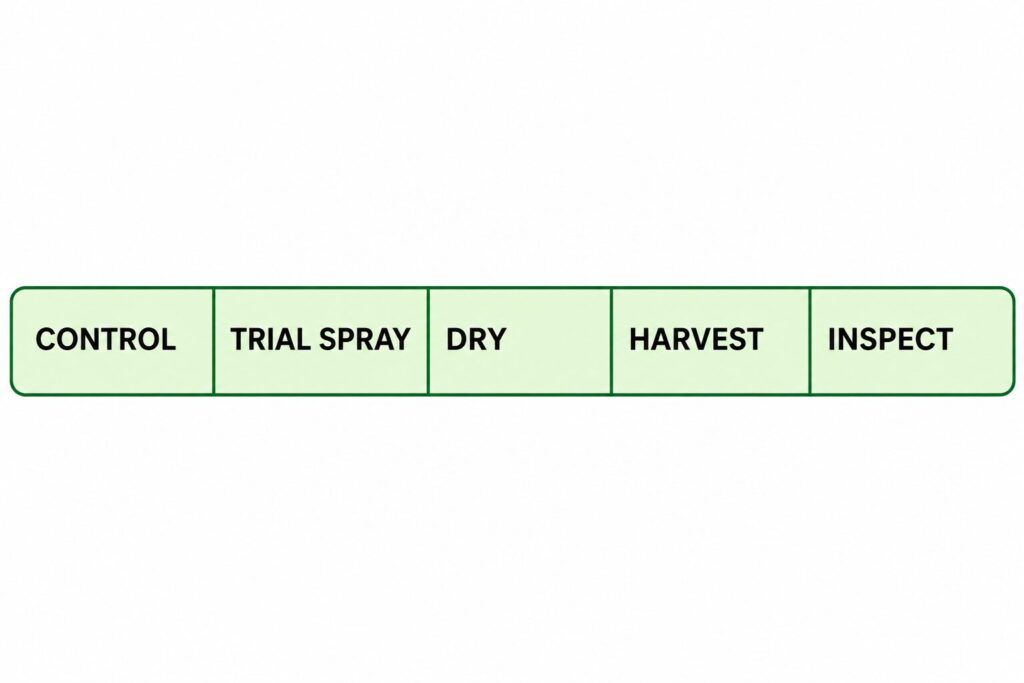
Quick answer
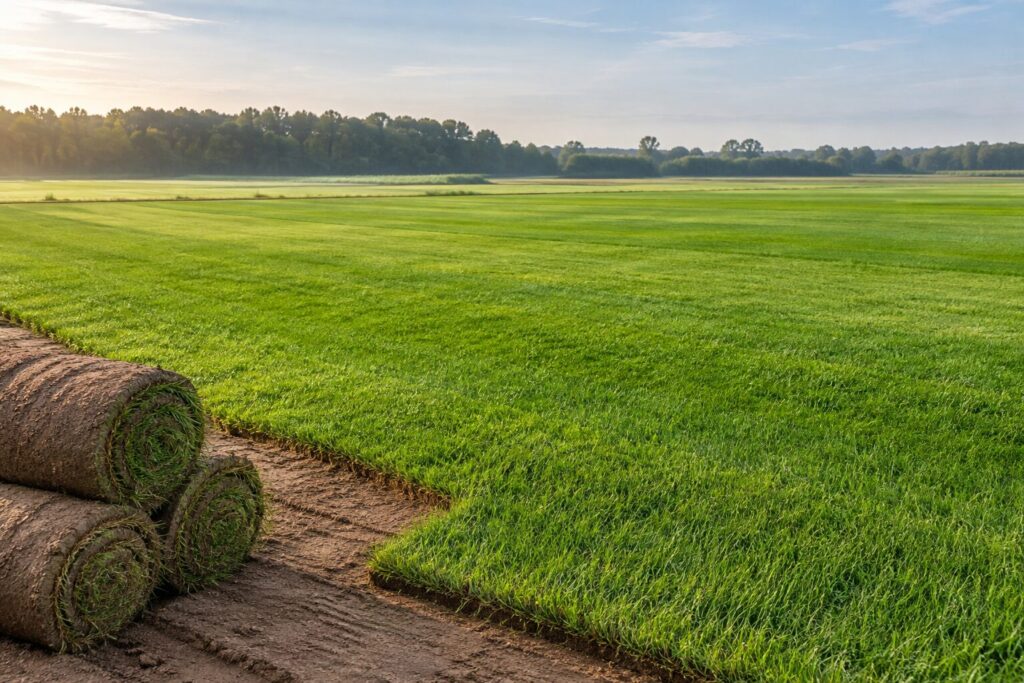
Yes, sod growers can trial turf colorant before harvest to improve the appearance of discolored sod. The goal is visual consistency, not restoration of dead tissue. The best timing and formulation depend on grass species, leaf condition, cutting schedule, weather, handling and customer expectations.
Why sod color matters
Buyers judge sod by its appearance, but color alone cannot establish root strength or plant health. Geoponics has previously documented Endurant demonstrations with sod producers. Treat those demonstrations as examples, not controlled evidence of a universal yield or sales benefit.
Choose by grass condition
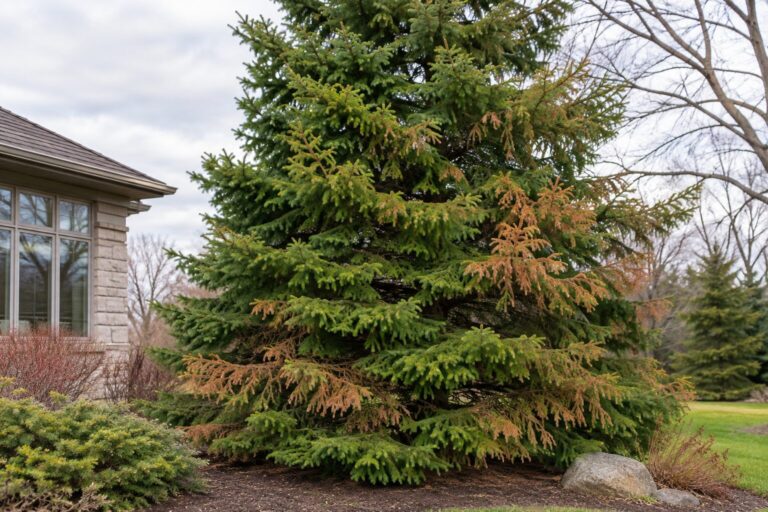
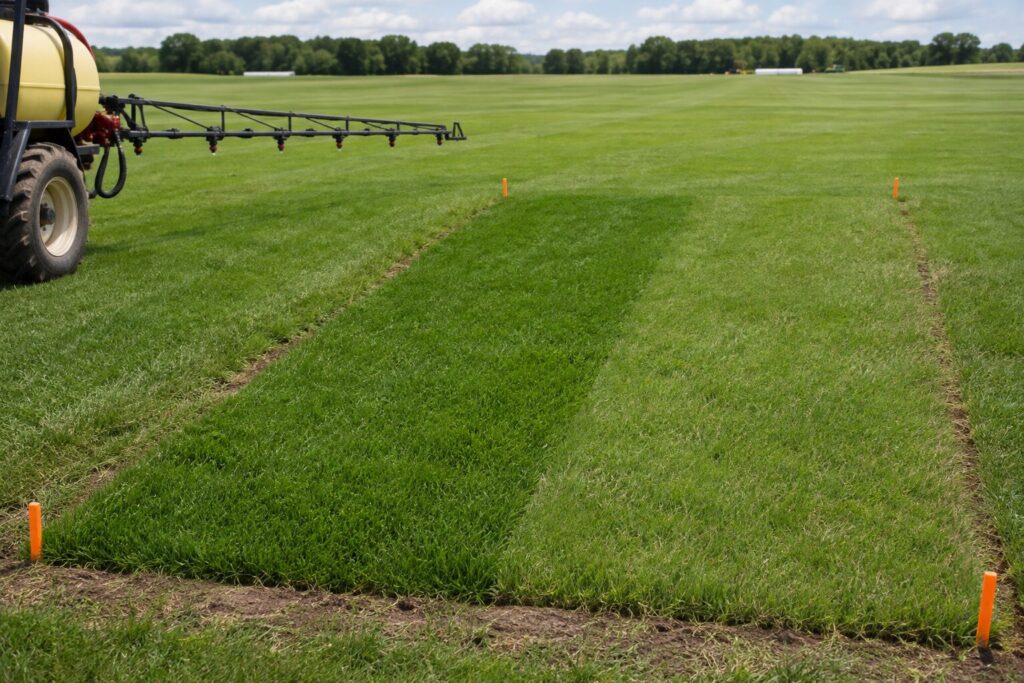
First distinguish actively growing, partly dormant, fully dormant and damaged sod. Select a matching color rather than assuming the darkest shade looks most natural. Endurant Perennial Rye (PR) is a lighter green option; Fairway and Premium offer other shades. Test a representative strip alongside untreated sod.
When should a grower apply it?
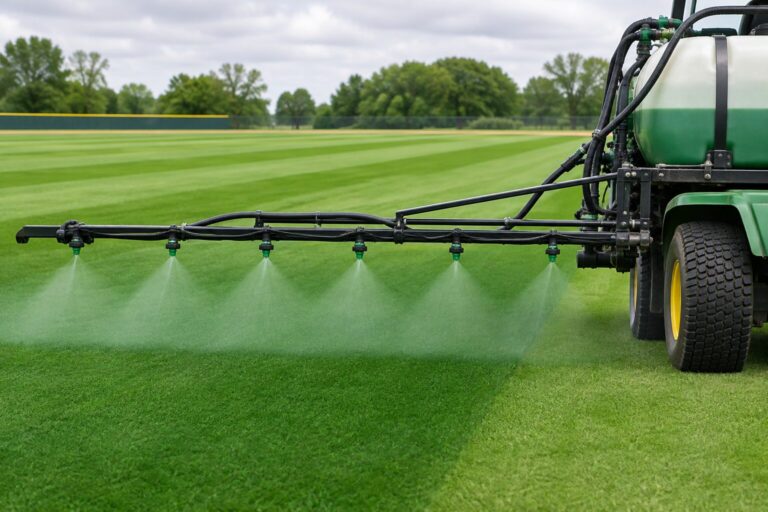
A preharvest application may reduce the need to spray after pallets are assembled, but no universal 24–48-hour interval has been validated for every farm. Plan enough time for full drying before mowing, harvesting, rolling or stacking. Confirm that equipment does not pick up wet colorant and that the sod remains marketable after transport.
What rate should you use?
The current Endurant PR product page lists a homeowner-style example of 8 US fl oz (237 mL) product per 1 US gal (3.785 L) water, with approximate coverage of 500–700 sq ft (46–65 m²). This is a small-area illustration, NOT a validated preharvest farm rate. For commercial acreage, obtain the current product label and conduct calibrated strip trials; do not extrapolate the example into a universal sod-farm prescription.
Calibrate and test
Record product volume, water volume, nozzle, pressure, application speed, grass height, weather, drying time and transfer to harvest equipment. Compare untreated and treated strips under natural light. Evaluate appearance after rolling, palletizing, delivery and installation. Keep irrigation and soil moisture sufficient for sod viability.
Avoid these mistakes
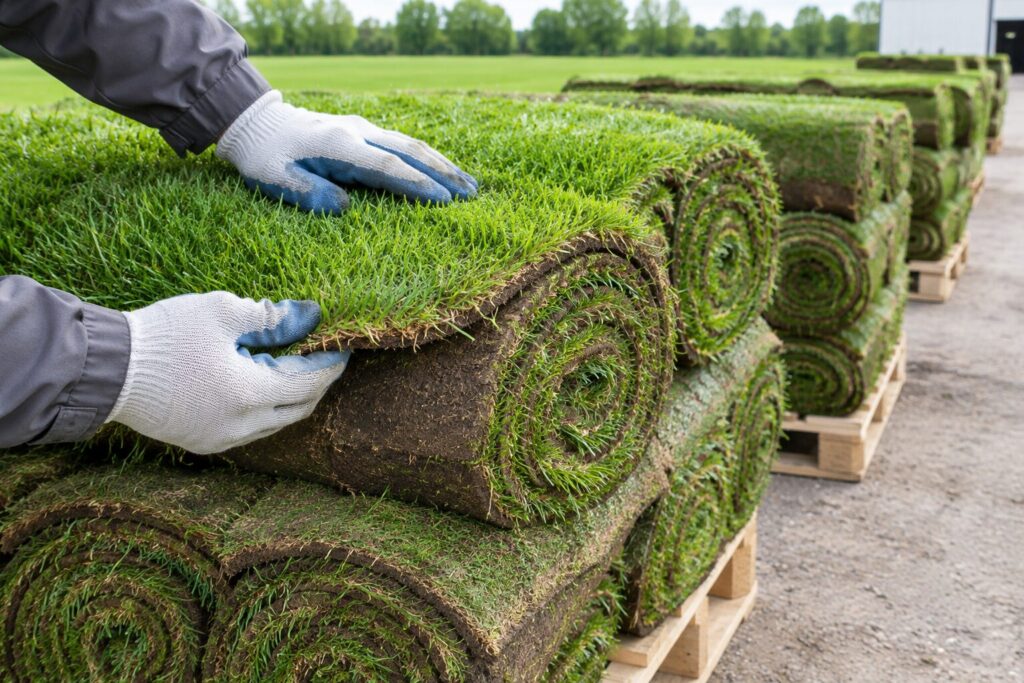
Do not spray stressed or diseased sod to conceal a quality problem. Do not apply immediately before rain or harvest without a dry-time trial. Prevent overspray onto roads and machinery. Colorant does not create new leaf tissue, improve rooting, or prevent handling damage.
Frequently asked questions
Does colorant make sod grow faster? No demonstrated growth benefit should be assumed. Will the color survive transport? It depends on drying, handling, moisture and abrasion; test your process. Can customers install treated sod normally? Follow standard sod establishment practices, including prompt installation and watering, and disclose any colorant treatment.
Conclusion
A small, documented preharvest trial is the best starting point. Geoponics can help evaluate an appropriate Endurant shade and current directions. Prioritize agronomic quality and honest customer communication over cosmetic appearance.