

Our approach to keeping golf-course pine straw in place and looking fresh with MulchCrete and Endurant Mulch Colorant — Pine Straw.
By Geoponics · November 20, 2026
How do you keep pine straw in place—and looking good up close?
At Geoponics, we recommend starting with a properly prepared bed. Our MulchCrete stabilizes pine straw, while our Endurant Mulch Colorant — Pine Straw refreshes faded color where the material is still sound. We pair those functions with sensible blower technique and a small course trial. Contact us to confirm the two-product application sequence before treating larger areas.
At Geoponics, we want your pine-straw beds to look good from the clubhouse and from the cart path. Golfers eventually get closer, and the bed beside the tee has nowhere to hide. We believe the details deserve a practical maintenance plan—and a little sympathy for the crew maintaining them.
We like a postcard-worthy landscape. We are less enthusiastic when the pine straw appears to have negotiated a transfer to the next hole.
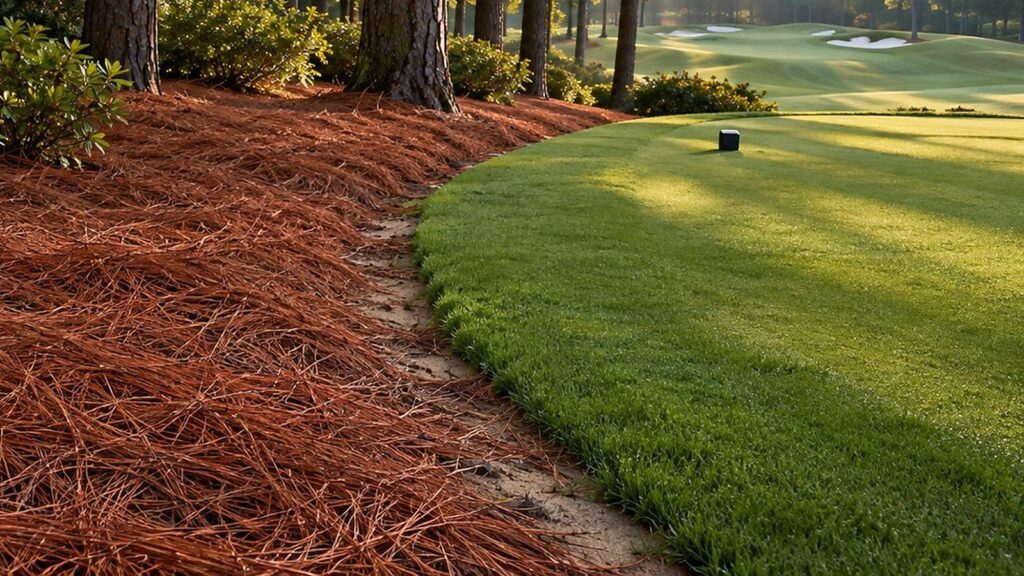
We know the work behind a finished bed matters: purchasing, unloading, hauling, spreading and dressing the edges. Then the blower comes through, and a few needles become a few more. Suddenly, the design theme is “pine straw with exposed sand.” We would rather help you protect that work than add “repeat yesterday” to the morning board.
Our goal is to help you manage two separate challenges: material movement and faded color. Here is how we recommend preparing the bed, evaluating our products and measuring whether the program earns its place in your maintenance budget.
Why does pine straw move when the blowers come through?
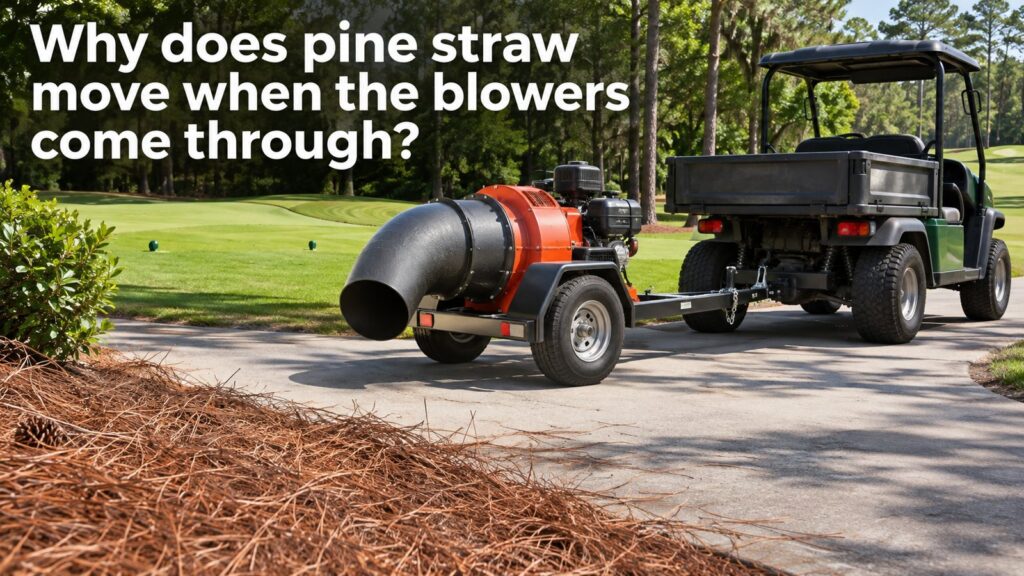
Loose needles can move under concentrated airflow, especially along exposed edges. We recommend looking at where the blower’s air stream crosses the bed. A Buffalo blower or another turbine blower has an important cleanup job; our aim is to make that routine work with the landscape around it.
We look at distance, nozzle direction, operating settings, bed condition and the cleanup route together. We do not blame the blower. It simply has tremendous enthusiasm and no access to your pine-straw budget.
What do our MulchCrete and Pine Straw colorant do?
| Product | Its job in the bed | What to inspect first |
|---|---|---|
| MulchCrete | Bonds and stabilizes groundcover; pine straw is a listed use. | Material placement, exposed edges, runoff and maintenance exposure. |
| Endurant Mulch Colorant — Pine Straw | Refreshes faded pine straw with the designated Pine Straw color. | Whether the existing material is sound and provides adequate coverage. |
We approach the bed with two goals: keep the material where it belongs, and keep it looking presentable. Our PS icon identifies the Pine Straw colorant; we use MulchCrete for the separate job of stabilization.
How do you prepare a golf-course pine-straw bed?
1. Walk the bed from the golfer’s viewpoint.
We recommend starting beside the tee markers, along the cart path and near the clubhouse approach. We look for four distinct issues: faded color, thin spots, displaced needles and exposed soil. Separating a color problem from a coverage problem helps us recommend the right next step.
2. Repair the bed before preserving its appearance.
Our preparation advice is straightforward: remove litter and unrelated debris, address weeds through your normal program, rake the material into place and replenish thin areas. We also recommend correcting concentrated runoff where it carries material away. Our colorant and stabilizer cannot rebuild missing pine straw.
3. Choose a small, representative trial.
We recommend a recurring trouble spot with a comparable untreated section nearby. Photograph both from fixed viewpoints and record material condition, bed size, exposure and the normal blower route. We want a fair comparison; giving the treated bed shelter while leaving the untreated bed exposed would be a very generous handicap.
How do we recommend applying MulchCrete to pine straw?
We recommend applying MulchCrete to a prepared, dry surface, coating evenly and allowing complete drying according to the current directions. Our published label lists pine straw as an intended material and describes a water-based adhesive that permits water and fertilizer penetration.
- Schedule the weather window. Our published label calls for a dry surface, temperatures above 45°F (about 7°C), and no precipitation forecast for at least 12 hours. Coordinate irrigation so it does not interrupt drying.
- Confirm the dilution before filling. The public label expresses dilution as “2:1 with water.” Check the current container directions or ask us to confirm which component is the two-part portion before batching. Do not apply undiluted.
- Coat the intended surface thoroughly. Follow the label’s wetting guidance and avoid untreated gaps. The label allows additional treatment in troublesome areas; establish the required coverage on the trial section.
- Allow complete drying. Our published label specifies 12 hours. Keep the crew’s blower pass out of that drying window, and inspect the finished treatment before resuming normal maintenance.
If you plan to use both products, contact us to confirm application order, compatibility and drying intervals. We explain the individual tasks below; we have not specified a combined tank mix or two-product sequence here.
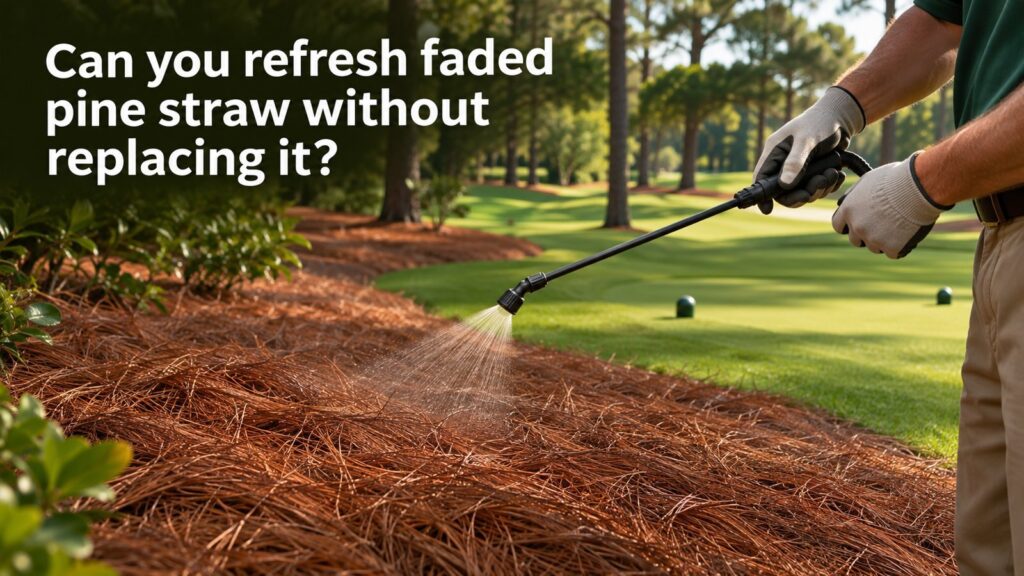
Can you refresh faded pine straw without replacing it?
Yes—when the pine straw remains sound and the bed has adequate coverage. We use our Endurant Mulch Colorant — Pine Straw to refresh the appearance of existing material. We recommend repairing thin, deteriorated or missing coverage first.
How do we recommend applying our Pine Straw colorant?
- Shake well before use. Confirm that the container is the Pine Straw color.
- Mix according to the container label. Our published Pine Straw label specifies 8 US fl oz per US gallon of water—about 62.5 mL per liter of water. For example, 4 US gallons of water take 32 US fl oz of concentrate (15.14 L water plus approximately 946 mL concentrate).
- Protect adjacent surfaces. Avoid spray on turf, plants, markers, stone and paving. The label warns of staining and gives pre-wetting and immediate rinsing directions for surfaces that may be unintentionally colored.
- Use several light passes. Build an even, natural appearance instead of flooding one patch. Check the finish from the same close viewpoint golfers will have.
- Rinse equipment promptly. Follow the label’s cleanup and handling instructions. Do not apply undiluted.
Our published coverage estimate is approximately 4,000 ft² (372 m²) per US gallon (3.785 L) of concentrate. Material density, calibration and desired color affect actual coverage, so we recommend measuring consumption on your trial before ordering for the entire course.
How do you know whether the program saves labor?
We recommend comparing actual maintenance work over time. Use the same normal blower settings and working distances, following equipment instructions. We suggest recording touch-up crew hours, replacement material, treatment cost and bed appearance over a meaningful maintenance period.
Avoided replacement material + avoided delivery/handling + avoided labor
− product cost − application labor − additional maintenance
We count crew-hours: three people working two hours equals six crew-hours. We recommend using fully loaded hourly costs consistently and counting hauling or spreading work only once. We want your own records to show whether fewer repeat visits justify the treatment cost while maintaining the presentation you expect.
Will MulchCrete make pine straw Buffalo-blower-proof?
We do not promise that treated pine straw will withstand every blower setting or operating distance. We recommend testing the cured treatment under your actual routine, including nozzle angle, distance and operating settings. Our objective is reduced displacement and more consistent presentation; sensible blower technique remains part of that plan.

“Your pine straw does not need a tour of all 18 holes.”
Fix the thin spots, trial the treatment and give it time to dry. Then check the bed after the normal blower pass. Your crew has enough on the morning list without teaching pine straw how to stay home.
Quick answers for golf-course superintendents
How do you keep pine straw in place on a golf course?
We recommend preparing an even bed, replenishing thin areas, managing runoff and adjusting blower technique. Our MulchCrete stabilizes groundcover, including pine straw. We suggest evaluating a properly cured test section under your normal maintenance routine before expanding treatment.
Can you refresh faded pine straw without replacing it?
Yes, when the material remains sound and coverage is adequate. Our Endurant Mulch Colorant — Pine Straw refreshes faded color. We recommend replenishing missing needles and repairing deteriorated areas first.
Is Endurant Mulch Colorant — Pine Straw the same as MulchCrete?
No. We offer them for different functions: our Endurant Mulch Colorant — Pine Straw refreshes appearance, while our MulchCrete bonds and stabilizes groundcover. We recommend selecting the function your bed actually needs.
Will MulchCrete make pine straw Buffalo-blower-proof?
We do not promise immunity to every air stream. We recommend assessing the cured treatment with your actual machine, operating distance, nozzle direction and normal working settings.
Can I mix MulchCrete and Pine Straw colorant in one tank?
We have not specified a combined tank mix in this guide. Contact us to confirm compatibility, application order and drying intervals for your two-product program before treating the full area.
Does colorant hide bare soil where the pine straw has disappeared?
No. Our colorant cannot replace the physical coverage of missing pine straw. We recommend replenishing those areas first, then evaluating stabilization and color refresh.
Where should a superintendent start?
We recommend one visible, recurring trouble spot beside a tee or cart path. Compare it with a similar untreated section and record appearance, material loss and crew time under routine maintenance.
How much Endurant Pine Straw colorant should I mix?
Our published Pine Straw label specifies 8 US fluid ounces of concentrate per US gallon of water, approximately 62.5 mL per liter of water. We recommend shaking well, following the current container label and applying multiple light passes for an even appearance.
How soon can I resume blowing after MulchCrete?
Our published MulchCrete label calls for complete drying for 12 hours. We recommend resuming maintenance only after the treatment has dried fully and meets current product directions. Allow for weather conditions when planning the work.
Will treating pine straw eliminate future replacement?
No. Organic material still ages and decomposes. Our products address movement and fading; we recommend continuing regular inspection and selective replenishment.
Product directions & related reading
- Published MulchCrete label
- Published Endurant Mulch Colorant — Pine Straw label
- MulchCrete groundcover selection guide
- Heritage Palms mulch-colorant interview (2016) — historical colorant experience, not a MulchCrete blower trial.