

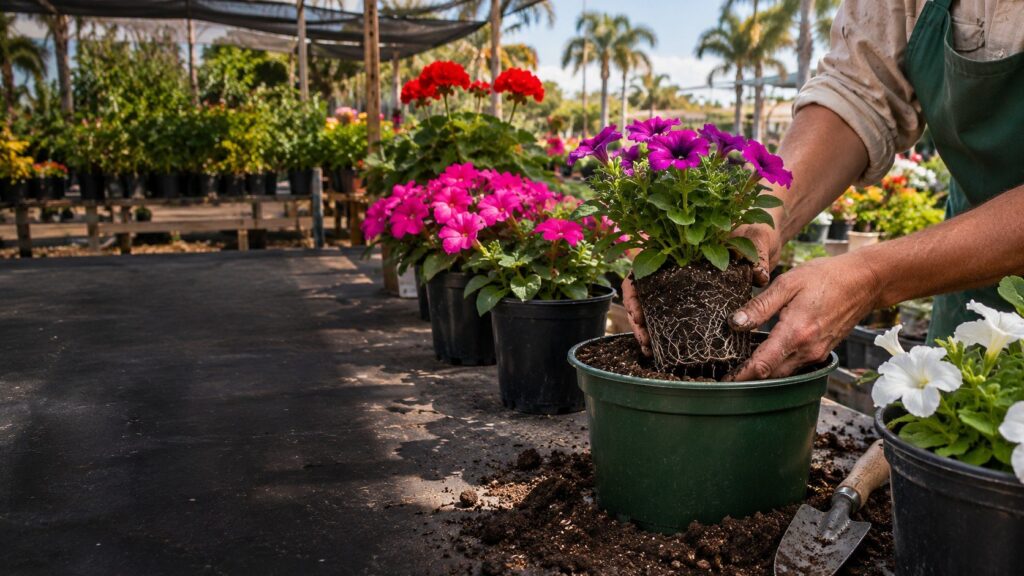
Newly planted petunias, impatiens, geraniums and other ornamentals sometimes wilt or stop growing after a move. Before reaching for extra fertilizer or a plant booster, check the roots, moisture and planting environment.
Why do healthy nursery flowers wilt after transplanting?
Transplanting changes how quickly roots can replace water lost through leaves. Root disturbance, a dry root ball, oversaturated media, abrupt changes in sun or wind, temperature stress and incorrect planting depth can all cause drooping. Symptoms overlap, so diagnosis matters more than adding multiple products.
How do I tell transplant stress from too little or too much water?
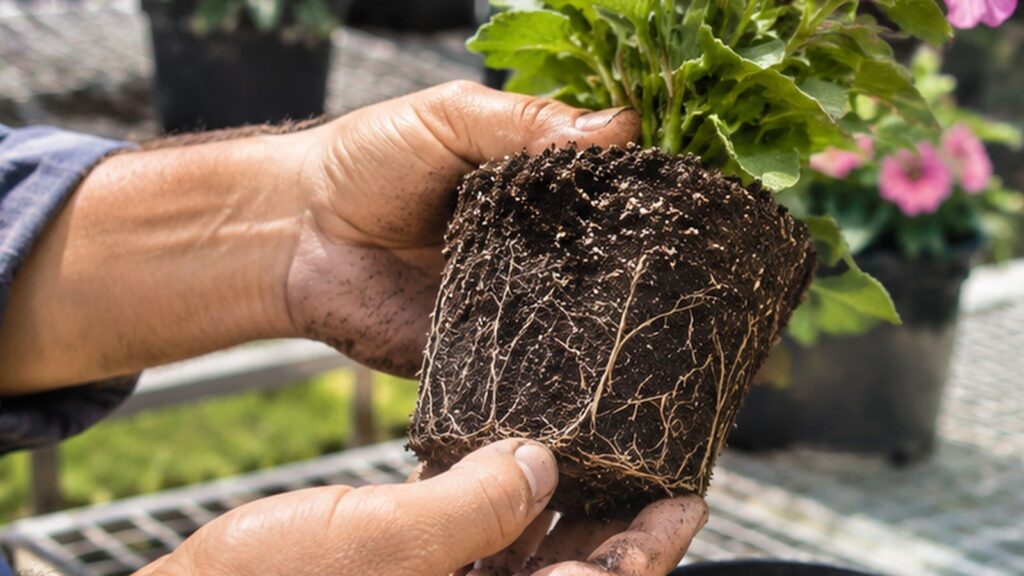
Feel the growing medium below the surface and check that water can escape the pot or planting bed. A light, dry root ball points toward inadequate water; persistent saturation and poor drainage point toward an oxygen shortage around roots. Wilting can occur in both situations. Water according to the plant and conditions rather than a fixed daily rule.
What should I do during the first few days after planting?
Handle the root ball gently, plant at an appropriate depth, water to settle the medium and monitor drainage. Acclimate greenhouse-grown seedlings gradually to outdoor light and wind. Keep containers from sitting in standing water; protect tender annuals from temperature extremes. If leaves discolor or collapse, check roots and soil before adding fertilizer.
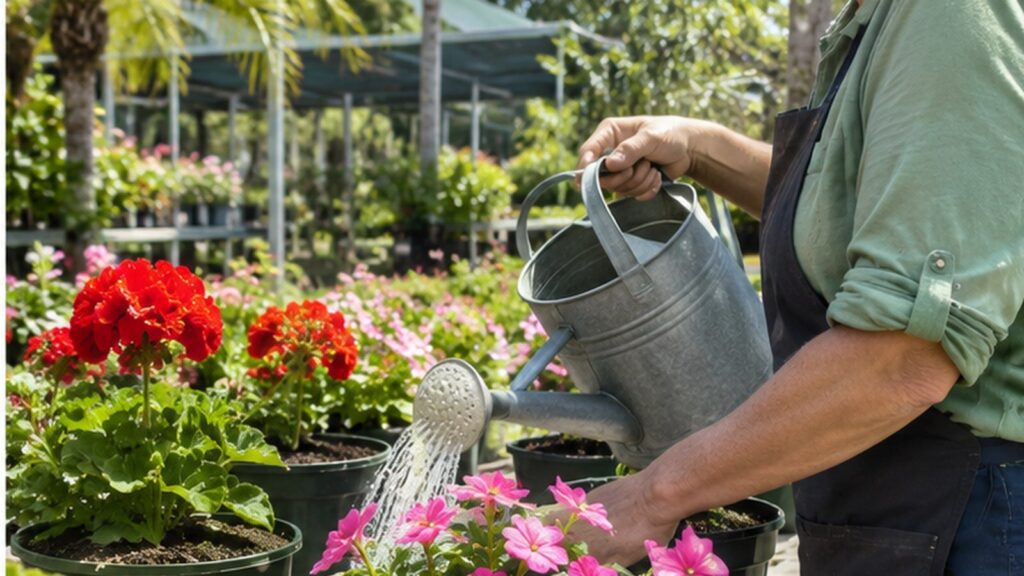
Will more fertilizer help newly transplanted petunias or impatiens?
Not necessarily. Extra fertilizer will not repair a damaged root system or poor drainage; overapplication can add salt stress. Use a soil or media test, crop-specific recommendations and the fertilizer label to decide whether nutrients are actually limiting growth. Some perennials develop more foliage and fewer flowers when overfertilized.
Where does a soil conditioner fit in a transplant program?
After watering, drainage, light and basic nutrition are addressed, a grower may evaluate Carbotein® as a supplementary soil conditioner in flowering-plant, vegetable or ornamental programs covered by its label. It is not a complete nitrogen-phosphorus-potassium fertilizer and is not established as a cure for transplant shock. Read the currently approved product label before use; no specific transplant-recovery claim or timing guarantee is made here.
What does the public Carbotein® label say about ornamental plants?
The publicly hosted 32-fl-oz label lists 4–8 US fl oz per 1,000 sq ft (about 118–237 mL per 92.9 m²) for vegetables, flowers and ornamentals, with enough water for coverage. For individual plants it lists 1–2 US fl oz in a 2-US-gallon watering can (about 30–59 mL in 7.57 L). These are published label figures, not a diagnosis or a guaranteed transplant-recovery treatment. Verify the current label supplied with the product and applicable local requirements before use; this review does not prescribe a frequency.
What should nurseries and greenhouse managers document?
Log plant species and cultivar, lot, potting-medium drainage, root appearance, light transition, irrigation observations, fertility input records and plant response. Compare treated and untreated groups only if a properly controlled evaluation is feasible. Record product lot and current label version for any soil input, and do not infer better flower yield or stress tolerance without evidence.

Blade McGreen tip of the day: Look below the leaves first. A moist surface does not tell you whether roots are too dry or too wet.
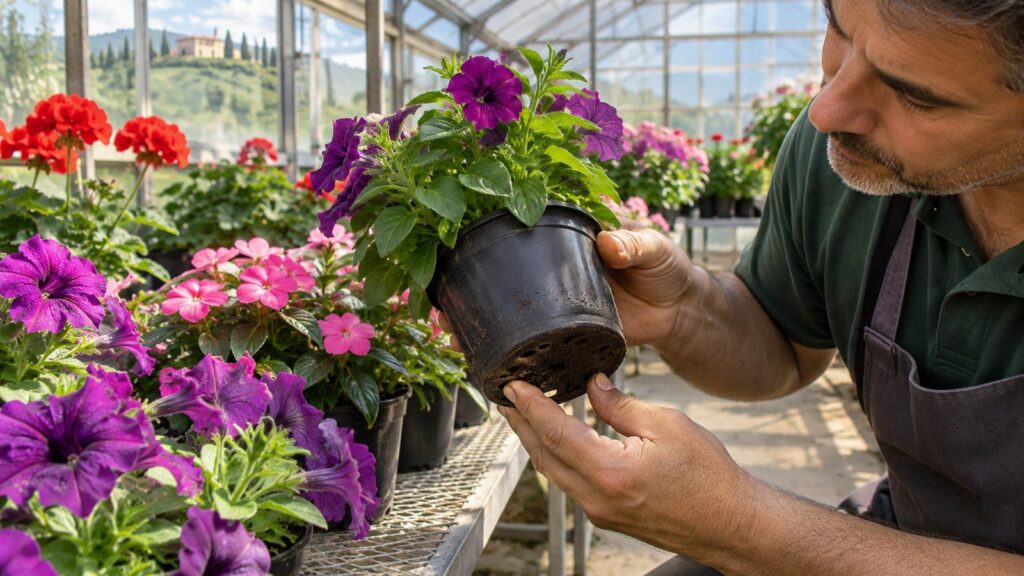
Can a simple root-zone check prevent unnecessary fertilizer?
Before adding fertilizer or a soil conditioner, look for the cause of stress in the planting area or container. These observations help growers decide what to correct first.
| What you see | What to check | First response |
|---|---|---|
| Wilting while potting mix is wet | Check drainage holes, root condition and how long the medium stays saturated | Correct the drainage and irrigation problem before adding nutrients |
| Leaf scorching after outdoor transplant | Check acclimation to sunlight, wind and temperature | Improve hardening-off and provide appropriate temporary shelter |
| Yellowing or stunted container plants | Check root-zone pH, soluble salts/EC, nutrient records and irrigation | Use crop-specific testing before changing a fertility program |
| Plants with few flowers but abundant foliage | Check light, temperature and excess nitrogen | Correct the growing environment; avoid a blanket bloom-booster promise |
What should the grower record? Track crop and cultivar, transplant date, media, irrigation changes, root observations, pH/EC tests and subsequent growth. A documented baseline is more useful than an assumed product effect.
Frequently asked questions
Why do newly transplanted flowers wilt even when the soil is wet?
Wet soil can still lack oxygen because drainage is poor. Check drainage and root health rather than automatically watering more.
Should I fertilize immediately after repotting flowers?
First correct watering, root placement and light conditions. Follow the species-specific fertilizer recommendation and avoid excessive nutrients.
Can a soil conditioner replace NPK fertilizer?
No. A soil conditioner can complement a fertility plan but is not a substitute for required nitrogen, phosphorus and potassium.
Does Carbotein® guarantee faster transplant recovery?
No. The product is marketed for soil conditioning and plant nutrition support; a specific transplant-recovery result is not verified.
What if petunias or impatiens stop blooming after planting?
Review temperature, sunlight, root establishment, moisture and fertilizer levels before selecting any corrective product.