


A finished landscape needs a maintenance plan, not just an application date. The useful questions are how the bed will be cleaned, when it should be inspected and how the owner will know whether the treatment delivered value. This guide brings those questions together for homes, commercial properties and landscape crews.
Evaluate MulchCrete over time using the condition of the treated bed and the work it requires. Inspect after disturbance, keep a simple maintenance record and correct the underlying cause before retreating. Claims about lifespan, safety or savings should match the product instructions and documented conditions.

Durability and seasonal maintenance
How long does MulchCrete last?
There is no single duration established here for every substrate, climate and maintenance pattern. Ask Geoponics for documented expectations for your use and monitor the actual bed. Do not treat an online “up to” statement as a guaranteed replacement interval.
What conditions affect mulch-glue longevity?
Record weather exposure, water pathways, material condition and maintenance activity. These provide context when the bed changes. A sheltered decorative border and an exposed, regularly disturbed bed should not be assumed to have an identical service history.
How do I know when another application is needed?
Inspect for renewed movement or an appearance outside the agreed project standard. Determine whether the cause is wear, disturbed material or a site problem before retreating. A calendar reminder is useful for inspection, but does not itself establish a need for more product.
Can I spot-treat loose areas?
Ask whether a localized correction suits the condition and current directions. Restore the affected material and address the source of disturbance first. Recording the location and reason helps reveal a recurring problem that a whole-bed reapplication might hide.
Can I add fresh mulch over an existing treated bed?
Plan the addition as a changed surface. New loose material is not automatically stabilized by an earlier treatment underneath. Evaluate total depth and plant clearance, then ask how the refreshed surface should be prepared and treated if needed.
Sources: [1]
Can I rake mulch after applying glue?
Raking can disturb the arrangement you intended to stabilize. Complete routine leveling beforehand and ask about suitable maintenance afterward. If reworking is necessary, inspect the altered area and decide on correction rather than assuming the original treatment remains intact.
How do I remove leaves from glued mulch?
Choose a cleaning method that removes debris without disturbing the groundcover, starting gently in a small area. Observe the result before extending the work. The objective is routine cleanup, not a stress test that damages an otherwise useful installation.
Can I use a leaf blower around treated mulch?
Establish an appropriate method on a fully dried, representative area and consult the product guidance. Document blower setting, distance and material if evaluating performance. A video at one setting does not authorize every blower, distance or operating technique.
How does freeze-thaw weather affect a bonded landscape surface?
Ask for evidence relevant to the climate and substrate instead of assuming an all-season rating. Inspect the surface after winter for changes and disturbance. Storage restrictions for the liquid are a separate issue from the performance of an installed treatment.
Can I remove or rearrange groundcover after applying MulchCrete?
Plan for possible disturbance of the bonded surface when redesigning a bed. Ask Geoponics about the appropriate removal or reworking method for the material. Do not assume a groundcover adhesive can be dissolved safely with any household solvent.
Plants, water and responsible use
Does MulchCrete allow water to pass through?
Geoponics describes the product as allowing water to penetrate stabilized groundcover. Continue monitoring the root-zone moisture and drainage appropriate to the planting. Water passage through the surface does not establish that irrigation quantity or underlying soil drainage is correct.
Sources: [2]
Can fertilizer reach the soil beneath treated mulch?
Geoponics identifies fertilizer penetration among the product’s features. Continue using a suitable plant-nutrition program and follow the fertilizer’s directions. MulchCrete itself should not be presented as adding plant nutrients or replacing fertilizer.
Sources: [2]
Can MulchCrete be used around established plants?
Evaluate the intended groundcover treatment and follow the current directions, protecting plant tissue from unwanted spray. Keep proper mulch clearance around stems and trunks. A product used in planted landscapes is not permission to coat leaves or apply it to every plant surface.
How do I avoid spraying plant leaves?
Plan the spray direction, shield nearby plant tissue and avoid conditions that carry spray outside the target. Keep control near bed edges and low foliage. Do not let a desire for complete groundcover coverage become indiscriminate coverage of the planting.
What should the current label tell me about use around pets?
Look for handling and access instructions relevant to the actual use of the area. Keep the container away from animals and obtain advice about chewing, digging or ingestion concerns. A general marketing description should not be expanded into a consumption-safety claim.
Sources: [3]
What should I check before using mulch glue around children’s play areas?
Confirm that both the product and the full surface system are appropriate for that use. Decorative groundcover suitability does not establish playground impact performance or safety certification. Keep access controlled during work and follow product-specific instructions.
Is mulch glue appropriate near vegetable gardens?
Get specific guidance for the proposed location, material and exposure. Do not infer permission to spray edible plant parts or claim suitability for organic certification. Separate a decorative border beside a garden from application within food-growing areas.
Can mulch glue be used near ponds or drainage inlets?
Plan to prevent product, overspray and cleanup water from reaching water or drains. Obtain guidance for the exact setting. Groundcover use and water permeability do not establish aquatic safety or authorize deliberate discharge into a pond.
Sources: [4]
Does mulch glue replace weed control?
No. MulchCrete is a groundcover adhesive, not a herbicide. Suitable mulch can help suppress weeds, but established weeds and new growth still need a management plan. Keeping the mulch arranged does not guarantee a permanently weed-free bed.
What is the difference between a product label and a safety data sheet?
The label provides product-use directions; the SDS addresses handling, hazards and related information. Read both current documents for the exact product. If they appear inconsistent or outdated, ask the manufacturer to reconcile them rather than choosing the most reassuring statement.
Commercial landscapes and credible results
Can MulchCrete help maintain commercial landscape beds?
It is worth evaluating where displaced groundcover creates recurring cleanup in a suitable decorative bed. Define a trial area, success criteria and maintenance method. Keep busy pedestrian or vehicle surfaces outside an assumed decorative-groundcover specification.
Is mulch glue appropriate for HOA common areas?
Evaluate each area by material, access and maintenance need. A trial with clear responsibilities can help an HOA assess appearance and labor requirements. Communicate the application schedule and access arrangements to the people maintaining and using the property.
How can hotels evaluate mulch glue around landscaped walkways?
Select a representative planting bed beside the walkway, record the starting condition and define the desired reduction in displaced material. Keep the walking surface and its slip or accessibility requirements separate. Coordinate treatment and maintenance with guest access.
What should landscapers test before treating a large property?
Confirm the substrate, application method, cured appearance and maintenance approach on a representative area. Record product use and conditions. Include a difficult but typical part of the site rather than choosing only the most sheltered display location.
How can maintenance crews document reduced mulch cleanup?
Log cleanup minutes, visits, material replaced and the area maintained before and after treatment. Record weather and other changes that could affect the comparison. Report the measured difference for that site rather than turning it into an unsupported universal savings percentage.
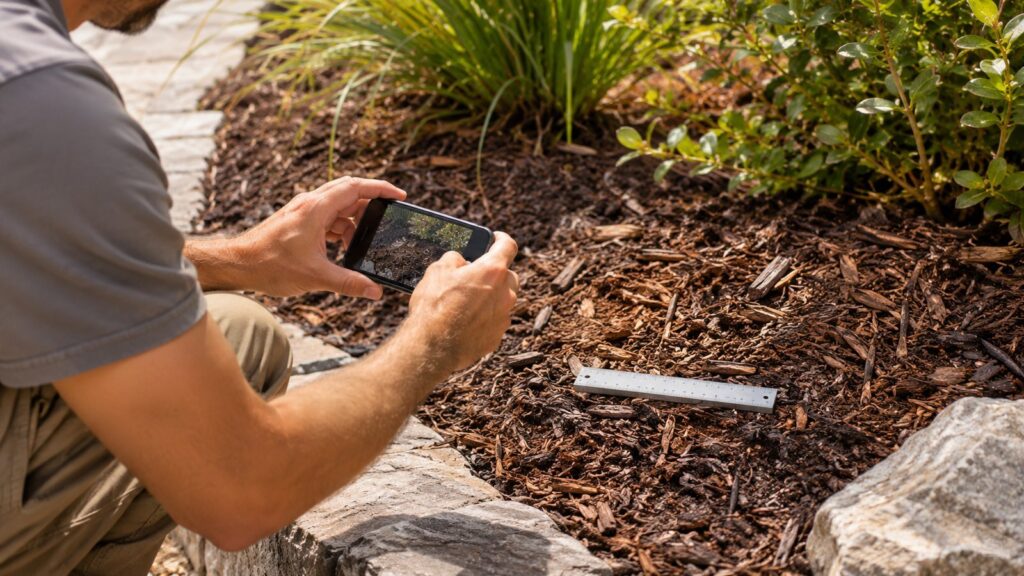
How should mulch-glue performance be photographed accurately?
Use dated photographs from matching positions, framing and lighting where practical. Preserve original files and disclose differences in maintenance or weather. Generated illustrations can explain a topic, but must not be presented as photographs proving a treatment result.
How do we compare treated and untreated areas?
Choose comparable areas and document their material, size, preparation and exposure. Change only what the test is meant to assess where practical. Record exceptions, and avoid assigning a treatment benefit to differences in drainage or maintenance between the areas.
What should a credible rain-resistance demonstration measure?
Record the application, drying period, surface area, slope and water exposure, then measure material displacement using a stated method. For natural rain, retain weather records. Distinguish a demonstration from a standardized certification or a guarantee against extreme storms.
What should a credible leaf-blower demonstration measure?
Identify the blower, setting, nozzle position, distance and duration, plus the groundcover and treatment details. Measure displaced material rather than relying solely on a dramatic camera angle. Repeat under comparable conditions before drawing a broad conclusion.
What information belongs in a documented MulchCrete case study?
Include site permission, project purpose, material, area, preparation, product lot, confirmed application method, conditions, dated observations and maintenance records. State limitations and disclose commercial relationships. Publish only measured results and genuine, authorized customer comments.

Blade McGreen’s Tip of the Day
Take the starting photographs before work begins. A consistent maintenance record is more useful than trying to remember how the bed looked last season.