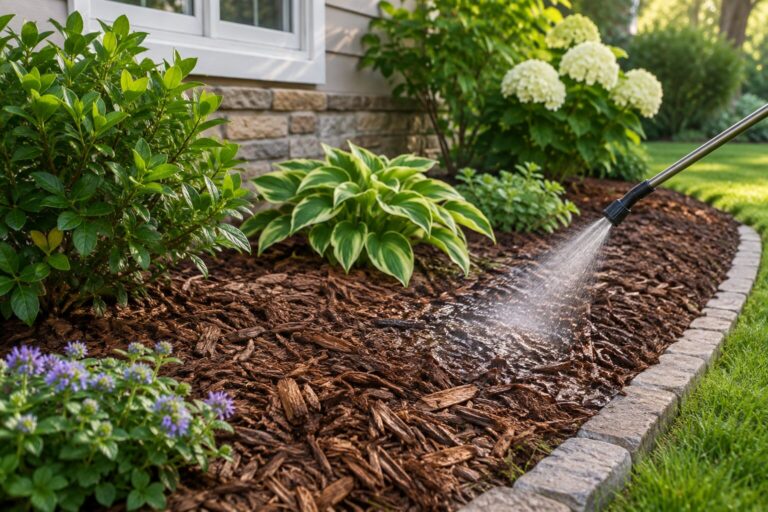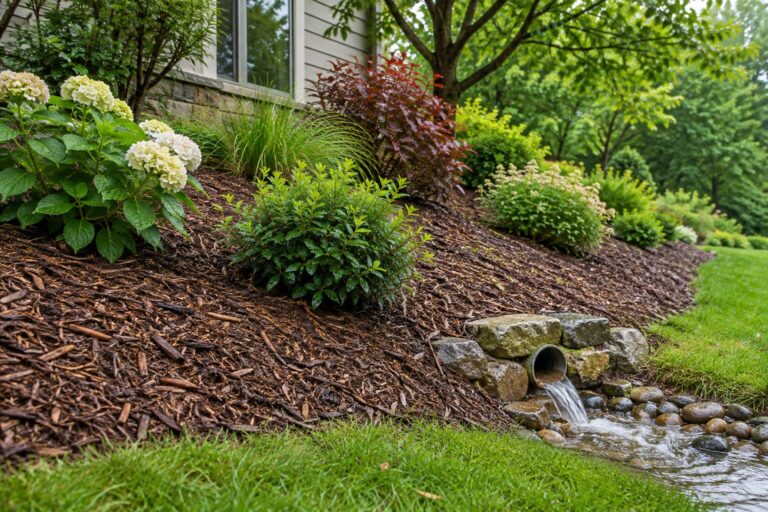


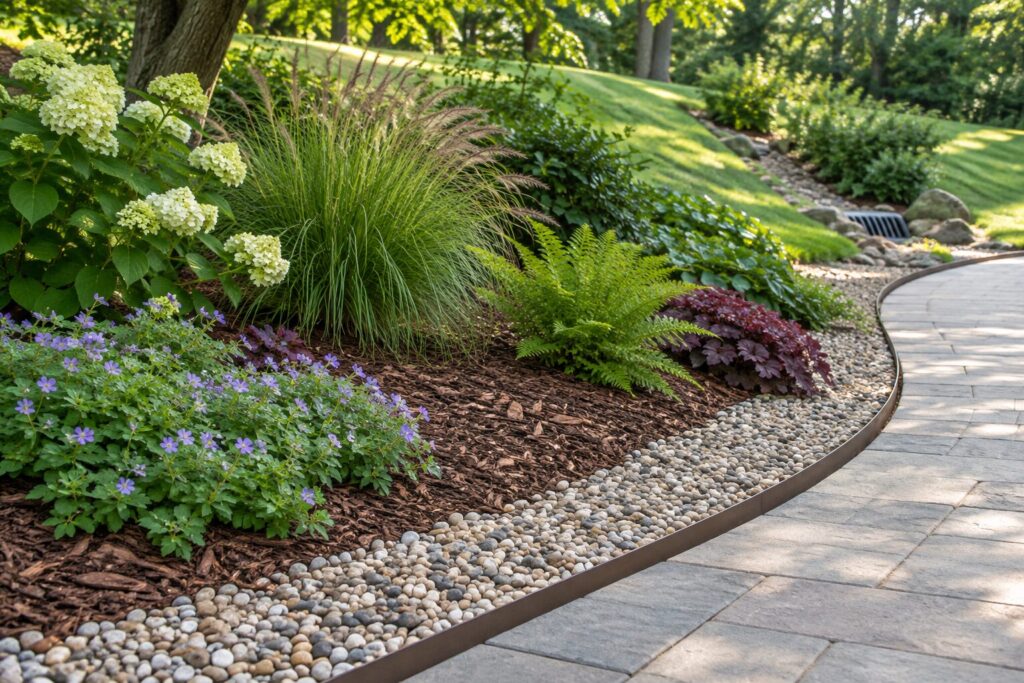
Pea gravel crossing a border and bark washing onto a path can look like the same problem: groundcover that will not stay where it belongs. The cause matters. This guide separates the material you want to hold from drainage, traffic and bed design, so MulchCrete is considered for the right job.
MulchCrete is intended for a range of loose groundcovers, including rocks, gravel, pebbles, mulch bark and pine straw. A decorative landscape use is different from a structural paving job. Choose the material and correct the site problem before deciding on an adhesive treatment.

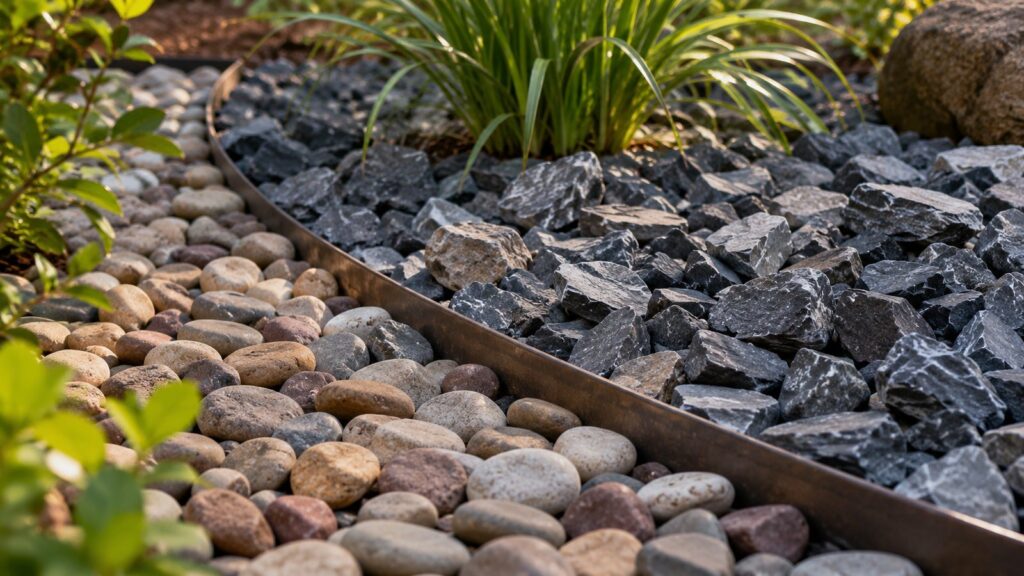
Rock and gravel questions
What is the best rock glue for landscaping?
Choose a binder intended for the material and the site’s use. MulchCrete is a candidate for decorative groundcover stabilization. Establish the required appearance, drainage and maintenance performance before deciding what “best” means for that particular landscape.
Sources: [1]
What is the best glue for pea gravel?
Pea gravel calls for a material-specific assessment rather than a generic glue ranking. MulchCrete’s listed materials include gravel and pebbles. Test the actual stone and confirm the intended use; a decorative border is a different requirement from a heavily used path.
Sources: [2]
Can MulchCrete be used as rock glue?
Yes. Geoponics lists rocks, gravel and pebbles among its intended groundcovers. Apply according to the current directions for the project, and assess a small representative area before wider use. That listing alone does not establish a vehicle-load rating.
Sources: [1]
What is the difference between mulch glue and rock glue?
These are market descriptions, not a universal strength classification. Some products identify both organic mulch and mineral groundcover as intended materials. Select by the exact product directions and use case rather than assuming anything called rock glue is structural pavement adhesive.
How do you keep decorative stones from moving?
First identify whether movement comes from an open edge, maintenance, foot traffic or runoff. Improve the relevant boundary or site condition, then consider a suitable binder such as MulchCrete for the groundcover. Treating the surface alone may not address the cause.
Can landscape glue hold river rock in place?
It may be appropriate for some decorative rock installations, but “river rock” covers widely different sizes and shapes. Request guidance for the actual stone and intended use. Do not infer a maximum rock size or load capacity from a generic photograph.
Does rock glue work on smooth pebbles?
MulchCrete lists pebbles as an intended material, but a test on your actual surface is still valuable. Cleanliness, placement and the intended result should be assessed together. A smooth pebble display does not demonstrate performance under foot or vehicle traffic.
Sources: [2]
Does stone size affect how well rock glue works?
Stone size and arrangement change the contact points and exposed surfaces being treated. Describe them when asking for a recommendation. A result on fine gravel should not be assumed to apply to large decorative boulders or a different bed structure.
Can rock glue stabilize gravel between stepping stones?
It may fit a decorative infill project if the product and site are suitable. Evaluate how people actually use the area, including turning feet and furniture. Keep structural paving support separate from the decision to stabilize loose infill.
How do I choose MulchCrete for a groundcover stabilization project?
Describe the substrate, location and intended use to Geoponics. Ask for the product and method that match those requirements. Keep decorative surface stabilization separate from structural pavement, vehicle-load or engineered soil-reinforcement specifications.
Sources: [3]
Runoff, wind and bed design
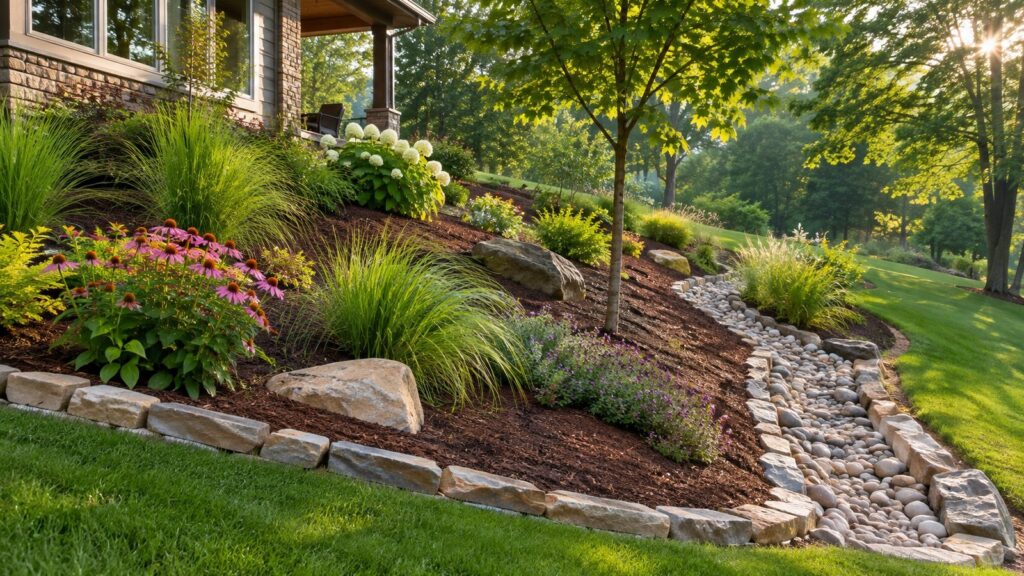
How do I stop mulch from washing away?
Trace the route of the water first. Correct concentrated runoff, choose suitable mulch and contain the bed appropriately. A binder can be considered for the remaining surface-stabilization need; it should be one part of the plan rather than a substitute for drainage design.
Sources: [4]
Can mulch glue help keep mulch on a slope?
It can be considered where the material and site suit the product, but slope alone does not define the job. Assess runoff concentration, soil movement and vegetation. Steeper or actively eroding sites may need drainage work, planting or a designed erosion-control system.
Sources: [4]
How do I keep mulch from blowing out of landscape beds?
Check exposed edges, bed depth and the material’s tendency to scatter. A suitable binder is one option to evaluate after the bed is prepared. Distinguish ordinary displacement from exceptional storm conditions; no universal wind-speed guarantee is supplied here.
Can MulchCrete help reduce mulch movement during heavy rain?
Its role is groundcover stabilization, but “heavy rain” is not a quantified performance specification. Rain intensity, slope and concentrated flow differ. Evaluate the site and avoid promising that a surface treatment will prevent every washout or flood-related loss.
Can mulch glue help around downspout splash areas?
Investigate the discharge before coating the surrounding mulch. A concentrated outlet may call for a suitable extension, splash arrangement or drainage solution. Keep a binder proposal focused on the landscape material after the water pathway is addressed.
Sources: [4]
When does a washout problem require drainage work?
Repeated channels, exposed soil, persistent ponding or a concentrated water outlet suggest a problem beyond loose surface pieces. Ask a qualified landscape or drainage professional to evaluate it. Repeatedly adding adhesive without changing the cause may not solve the recurring damage.
Sources: [4]
Can landscape glue replace edging?
Treat them as different tools. Edging defines the boundary; a binder addresses the groundcover surface. Where a stable edge is needed, specify it separately. A good sample result inside a bed does not prove that unsupported perimeter material will stay contained.
How should I prepare an erosion-prone bed before applying mulch glue?
Identify runoff routes, repair the bed layout and choose an appropriate groundcover. Remove unrelated debris and establish the desired surface before treatment. If the underlying slope is unstable, obtain a site-specific plan before considering a surface adhesive.
Sources: [4]
Does landscape glue work where water pools?
Do not assume it is suitable for standing water or immersion. Diagnose the ponding and obtain guidance for the proposed product. Allowing water through groundcover is not the same as solving poor soil drainage or certifying continuous underwater service.
How should I inspect a treated bed after a storm?
Photograph the edges and any displaced areas before tidying. Note where water entered, which material moved and whether the substrate changed. Compare with pre-storm observations to decide whether the next step is maintenance, application advice or drainage correction.
Choosing the groundcover
Does MulchCrete work on pine straw?
Pine straw is expressly identified among MulchCrete’s intended materials. Confirm the bed is properly prepared and follow the current directions. Evaluate appearance and the required degree of stabilization on the actual straw rather than transferring results from wood chips.
Sources: [1]
Can mulch glue hold pine bark nuggets?
MulchCrete identifies mulch bark as an intended groundcover. Nugget size and placement still matter to the project assessment. Supply a photo and sample description when requesting guidance, especially where the bed edge or runoff has caused repeated movement.
Sources: [2]
Does mulch glue work on shredded hardwood?
Wood mulch is a relevant groundcover category for MulchCrete. Confirm the exact material is suitable, prepare an even bed and assess a representative sample. Avoid assuming that a very loose or deteriorated layer will behave like a newly prepared installation.
Sources: [1]
Can mulch glue be applied to cedar mulch?
Identify whether the material is fine shredded cedar, chips or another form, then confirm suitability with the supplier. The wood species name alone does not specify the whole installation. Assess the finished sample for the appearance and maintenance requirements you want.
Can MulchCrete be used on dyed mulch?
Treat the dye and adhesive as separate products. Confirm compatibility with the actual dyed material and inspect a sample after drying. Do not assume that an adhesive refreshes faded color or that a colorant authorizes a combined tank mixture.
Does mulch glue work on rubber mulch?
Rubber is not specifically identified in the MulchCrete label reviewed for this guide. Obtain written product-specific guidance before using it there. A decorative-groundcover application does not establish suitability for a playground surface system.
Sources: [2]
Can landscape glue stabilize shell groundcover?
Shell material is not specifically named in the reviewed MulchCrete label. Send Geoponics a description, particle size and intended use for confirmation. Do not extrapolate from pebbles to shells solely because both are decorative groundcovers.
Sources: [2]
Can MulchCrete be used on sand or exposed dirt?
Sand and dirt are among the listed materials. Define whether the goal is surface stabilization, dust reduction or a different task, and obtain the applicable guidance. A groundcover treatment should not be represented as engineered soil reinforcement.
Sources: [1]
Does old mulch need different preparation from new mulch?
Assess its condition before deciding. Remove debris, address weeds and identify deterioration or uneven buildup. Adhesive does not turn decomposed organic material into fresh mulch. Retain sound material where appropriate and prepare the bed to the desired condition first.
Sources: [5]
How do particle size, dust and surface texture affect bonding?
They define what is being treated and how uniformly a liquid can reach the intended surfaces. Include those details in the trial and project record. Judge the actual groundcover, not a clean display sample that differs from the material in the landscape.

Blade McGreen’s Tip of the Day
Follow the path of displaced material back to its cause. A better edge or drainage correction may be as important as the surface treatment.
Sources and further reading
- Geoponics: MulchCrete product description
- Geoponics: published MulchCrete label
- Geoponics: Soil stabilization products
- Iowa State Extension: Gardening on Slopes and Hillsides
- University of Minnesota Extension: Mulching for soil and garden health
Continue the MulchCrete series
- Best Mulch Glue: How to Choose MulchCrete for Your Landscape
- How to Apply MulchCrete: Preparation, Drying and Troubleshooting
- MulchCrete Care and Performance: Longevity, Maintenance and Results