

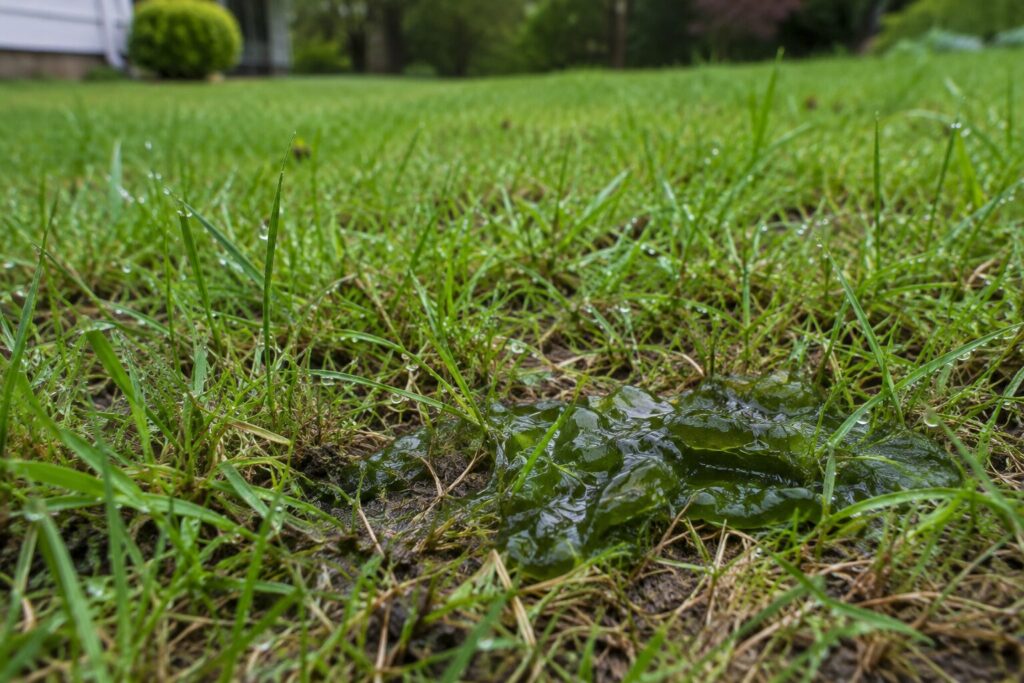
Quick answer: what is the green slime?
A green or dark gelatinous layer on a lawn, golf putting green or sports field may be algae or a cyanobacterium such as Nostoc. Cyanobacteria are photosynthetic bacteria, not true algae. Appearance alone is not a laboratory identification. Wet weather, persistently damp surfaces, shade, compacted soil and thin turf make these organisms more likely to appear.
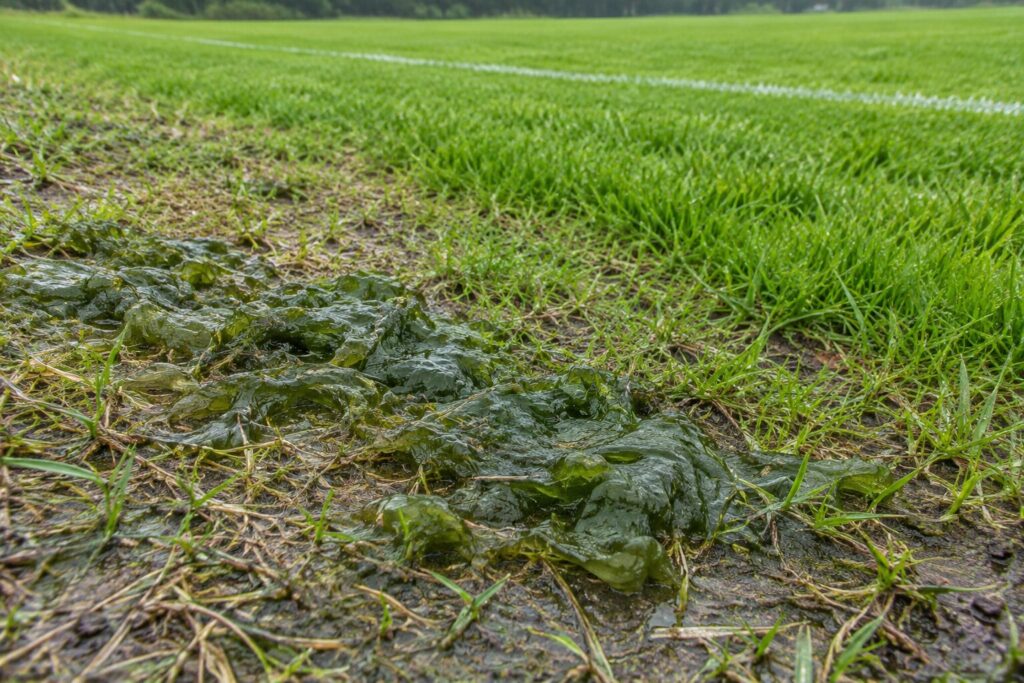
A hydrated Nostoc mat can be slippery. When it dries, it can leave a dark crust that interferes with turf establishment. Mark slippery areas and restrict play or foot traffic until the hazard is addressed.
Why does it return after rain or irrigation?
Algae and cyanobacteria frequently colonize bare or weak turf where water stays near the surface. Overwatering, uneven sprinkler coverage, poor surface grades, heavy organic matter, low air movement and excessive shade can keep the surface wet. On golf greens, a persistent mat may restrict water movement and gas exchange, compounding the original turf problem.
A surface crust is not the same as black layer. Black layer is a separate subsurface, oxygen-deficient condition sometimes associated with black sulfide deposits and a rotten-egg odor. Inspect a soil core and seek qualified diagnosis rather than assuming every dark patch is black layer.
A practical five-step recovery plan
- Identify and make safe. Photograph the patch, check whether it is slippery and examine the turf canopy. If the area is used for sports, restrict access while slippery.
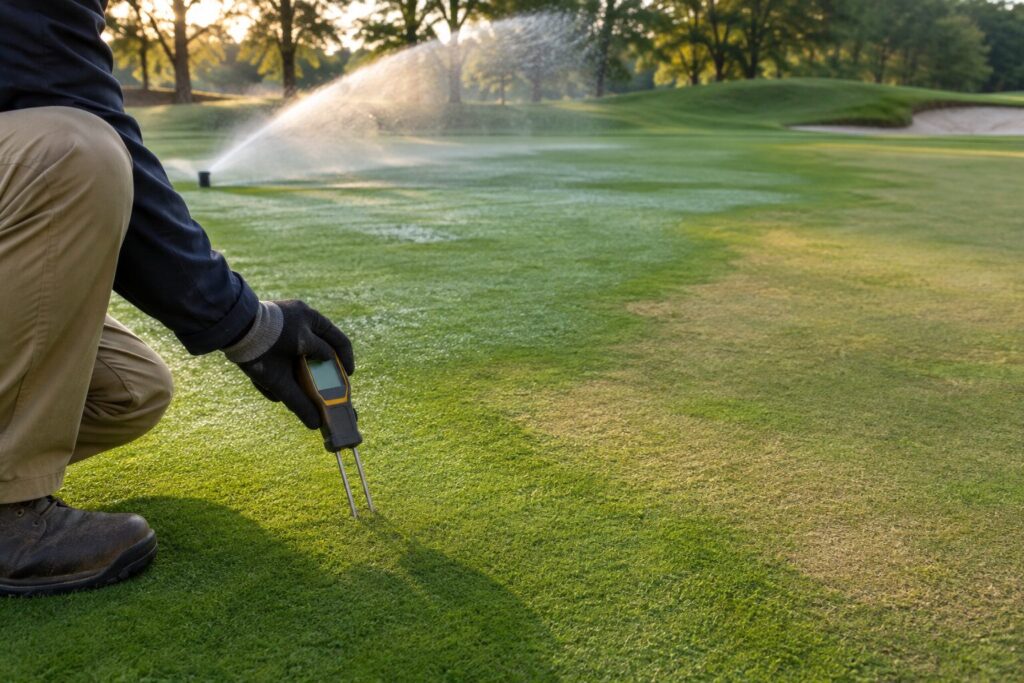
- Audit irrigation. Check run times, sprinkler overlap, leaking heads and overspray from adjacent zones. Use a soil-moisture meter and avoid repeatedly wetting an already saturated surface.
- Restore water movement. Correct low spots and blocked drainage. Where agronomically appropriate, core-aerate, relieve compaction, manage excess organic matter and topdress. A surfactant cannot replace drainage construction or mechanical aeration.
- Improve the growing environment. Increase sunlight and airflow where feasible, reduce unnecessary wear, and support a denser turf canopy with species-appropriate mowing and fertility.
- Reassess and document. Compare photographs, soil moisture, infiltration and turf recovery over time. Persistent infestations may need a turf specialist and locally authorized treatment; do not assume any soil conditioner is an algaecide.
Where do Penterra and Agriox fit?
Penterra is a soil penetrant/surfactant intended to improve water infiltration through the soil profile. It may be considered where uneven infiltration contributes to the problem, alongside irrigation and drainage corrections. The published Geoponics label lists 32–64 US fl oz/acre (2.34–4.68 L/ha) in at least 50–80 US gal/acre (468–748 L/ha) of carrier for soil-water movement. It calls for watering in and says not to exceed 64 US fl oz/acre (4.68 L/ha) in one application. These are label examples, not a treatment claim for algae; confirm the current local label before use.
Agriox is a soil oxygen-release product positioned for oxygen-deficient root zones. It is not presented here as a direct treatment for algae or Nostoc. Its published label contains oxidizer and corrosive hazard warnings and mixing restrictions. The older label and newer marketing material describe different rates; this article intentionally gives no Agriox application rate until Geoponics confirms the current label and site-specific program. Use qualified professional guidance and appropriate protective equipment.
How can homeowners and professionals apply this advice?
For a small lawn, start with a screwdriver or soil probe, a rain gauge, sprinkler inspection and photographs. Do not apply an unidentified chemical to a slick surface. For golf greens, athletic fields and municipal turf, map problem areas, measure root-zone moisture, inspect soil cores and evaluate drainage and irrigation calibration. If a soil penetrant is selected, use calibrated equipment and follow the actual label.
A product can help manage a specific soil-water problem, but durable improvement depends on correcting the environment that allows the slime to return.
Quick questions and answers
Is the slime killing my grass?
Often it colonizes turf that was already thin or stressed. A persistent mat can then obstruct recovery, so diagnose the underlying turf decline.
Will a wetting agent kill algae?
No. Penterra is a soil penetrant, not a registered algae-control claim in this article. Correct irrigation, drainage, shade and turf density first.
Can I play on the area?
Avoid play or walking on slippery mats until the hazard is removed and the surface is safe.
Does Agriox fix black layer?
Agriox is marketed for oxygen-deficient soil, but black layer requires diagnosis and a site-specific program. Follow the current label and professional guidance.
Technical references and product information
Learn about Agriox
View Geoponics blog
Application safety note: follow the current local product label. Agriox is an oxidizer and has serious hazard warnings.
Sources and further reading
- USGA (July 3, 2026): Controlling Blue-Green Algae on Putting Greens
- UGA Extension: Slippery Lawns and Nostoc
- USGA: All-in on Fighting Algae
- Geoponics: Penterra official product page
- Geoponics: Penterra product label
- Geoponics: Agriox product information
- Geoponics: Agriox product label
Need help diagnosing a wet, thin turf area? Contact Geoponics for product selection guidance after reviewing irrigation, drainage and soil conditions.